
US President Donald Trump on Thursday announced that Israel and Lebanon have reached an agreement to initiate a 10-day ceasefire, following intensified diplomatic efforts to reduce hostilities in the region.

US Special Envoy Steve Witkoff and Iranian Foreign Minister Abbas Araghchi are reportedly heading to Switzerland for a new round of US-Iran negotiations, following a recently announced memorandum of understanding to end hostilities in West Asia and a ceasefire between Israel and Hezbollah.

In a statement issued following the announcement of the US-mediated deal, Qassem characterised the agreement as a 'humiliating' and 'shameful' surrender of Lebanese sovereignty that prioritises Israeli and American dictates over the nation's independence.

Hours after ceasefire, US President Donald Trump on Wednesday warned against any country supplying military weapons to the Islamic Republic, stating that he would impose a 50 percent tariff on all goods exported to the United States.

US President Donald Trump has indefinitely extended the ceasefire with Iran at the request of Pakistan, aiming to allow Tehran's leadership time to form a unified proposal to end the seven-week war.

Pakistani security forces killed five terrorists in separate operations in the Khyber Pakhtunkhwa province. The operations, based on intelligence reports, took place in the Tank and Dera Ismail Khan districts, targeting members of the banned Tehrik-e-Taliban Pakistan (TTP). Weapons and ammunition were recovered from the slain terrorists.
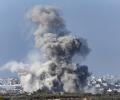
The Israeli military said it carried out the attack on Saturday near Gaza City, claiming Saad was the target.

Indian benchmark indices Sensex and Nifty experienced a decline in early trade, mirroring weak global market trends and persistent outflows from foreign institutional investors (FIIs), exacerbated by ongoing geopolitical uncertainties in West Asia.

The United States and Iran, with regional mediators, are reportedly discussing a potential 45-day ceasefire to prevent further escalation of conflict, including strikes on Iranian infrastructure and retaliation against Gulf states' facilities.

US Secretary of War Pete Hegseth on Wednesday claimed that Tehran "begged" for a truce, maintaining that Washington achieved a "decisive military victory" during 'Operation Epic Fury.'
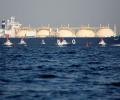
The government has withdrawn most provisions of the emergency natural gas supply regulation order imposed during the West Asia conflict after liquefied natural gas (LNG) shipments through the Strait of Hormuz resumed following a ceasefire.

US President Donald Trump on Wednesday backed Israel's ongoing military operation in Lebanon, stating that Hezbollah "was not included" in the recent ceasefire deal between Washington and Tehran, which halted the conflict in West Asia for two weeks.

Israeli Prime Minister Benjamin Netanyahu on Thursday called for the opening of direct negotiations with Lebanon, as tensions persist along the border despite a two-week ceasefire aimed at halting hostilities in West Asia.

Top leaders from the US, Iran, and Pakistan, along with other nations, have gathered in Switzerland for high-level talks aimed at restoring peace in West Asia. These negotiations follow a recently signed Memorandum of Understanding between the US and Iran, initiating a 60-day window for a deal. Discussions focus on Iran's nuclear programme and the fragile interim peace deal, amidst renewed tensions and the fluctuating status of the Strait of Hormuz.

Following the death of Ayatollah Ali Khamenei, his son and successor, Mojtaba Khamenei, issued a "revenge list" featuring 13 world leaders, including Donald Trump and Benjamin Netanyahu, with a graphic depicting them as targets, amidst escalating regional hostilities and US reports of an Iranian assassination plot against Trump.

Donald Trump has escalated rhetoric against Iran by posting AI-generated images and videos depicting US military strikes, warning Tehran that time is running out to secure a ceasefire agreement.

US Vice President J D Vance is currently in Switzerland, leading critical technical talks with Iran to advance diplomatic efforts on Iran's nuclear programme and secure a lasting ceasefire in Lebanon, following a recently signed memorandum of understanding aimed at de-escalating West Asian hostilities.

On June 21, the United States and Iran started high-level talks at the Burgenstock luxury hotel in Switzerland, with mediation by Qatar and Pakistan, in an effort to build on a fragile ceasefire and launch a 60-day roadmap toward a broader agreement.

'Actual implementation of the 14-point agreement is proving hard to achieve let alone striking and sustaining a long-term treaty or deal.'

Direct talks between the US and Iran, mediated by Pakistan, have failed to produce an agreement after 21 hours of negotiations, with disagreements over Iran's nuclear ambitions and sanctions proving insurmountable.
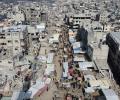
India attended the inaugural meeting of US President Donald Trump's Board of Peace on Gaza as an observer country, represented by Charge d'affaires at the Indian Embassy in Washington DC, Namgya Khampa.

US Secretary of State Marco Rubio on Friday (local time) announced a US-mediated framework agreement between Israel and Lebanon aimed at achieving "lasting peace and security".

US President Donald Trump and Israeli Prime Minister Benjamin Netanyahu are reportedly planning a White House meeting as early as next week, despite growing scepticism within Trump's inner circle regarding Netanyahu's actions and widening disagreements over regional security and Iran.

China has criticised the US blockade of the Strait of Hormuz, calling it a dangerous and irresponsible move, and urged Washington and Tehran to honour the ceasefire. Beijing also denied aiding Iran militarily and threatened countermeasures if the US imposes tariffs.

Iranian President Masoud Pezeshkian has confirmed Tehran's participation in Pakistan-facilitated peace talks with the US in Islamabad, according to Prime Minister Shehbaz Sharif. This development follows a conditional ceasefire agreement and aims to address regional tensions.
Pakistani security forces killed 13 terrorists in multiple intelligence-based operations in the Khyber Pakhtunkhwa province, amidst a surge in terrorist activities in the region.

The US military carried out 'self-defence strikes' targeting Iranian missile launch sites and boats near the Strait of Hormuz, even as President Trump announced progress in ceasefire negotiations, stating Iran's enriched uranium will be 'turned over' or destroyed.

The United States conducted retaliatory strikes against Iran, targeting over 80 sites, after accusing Tehran of attacking commercial vessels in the Strait of Hormuz, while Iran condemned the US decision to revoke a temporary suspension of sanctions on Iranian oil sales.

A peace deal between the US and Iran, set to be signed in Geneva, faces significant hurdles over the release of Iran's USD 12 billion in frozen assets, with conflicting reports from both sides on the conditions for their release.

United States President Donald Trump and Iranian President Masoud Pezeshkian have virtually signed a 14-point memorandum of understanding (MoU) to end hostilities, reopen the Strait of Hormuz, and begin a 60-day negotiation process on sanctions and Iran's nuclear programme.

US and Iran officials have reportedly agreed to de-escalate tensions and ensure free passage through the Strait of Hormuz, with technical talks scheduled to continue. This development follows months of conflict, rising gas prices, and strained diplomatic relations, marked by recent retaliatory strikes and threats from both sides. Further discussions on Iran's nuclear program are set to take place in Qatar, highlighting ongoing diplomatic efforts despite recent volatility.

The harsh truth is that the US is no longer a reliable partner, cautions Ramesh Menon.
Six terrorists were killed in an intelligence-based operation in Pakistan's Khyber Pakhtunkhwa province. The operation was conducted by the Counter Terrorism Department and the Kohat district police department. The terrorists were allegedly planning a large-scale attack in the Lachi tehsil district.

China's week-long mediation between Pakistan and Afghanistan concludes without a formal agreement, though Beijing claims progress in exploring solutions to resolve their differences.

Tensions escalate between Iran and the US over control of the Strait of Hormuz, a crucial shipping lane for global oil supplies, as both sides discuss extending a fragile ceasefire.

Despite a ceasefire agreement between Iran and the United States, the Strait of Hormuz remains blocked due to Iran's inability to locate and remove all the mines it laid during the conflict, hindering global oil and gas supplies.

The United States and Iran have reached an agreement in principle to immediately and permanently halt all military operations, lift sanctions, and work towards a comprehensive final agreement within 60 days, including a significant reconstruction package for Iran.

Trump further alleged that Iran was behind the attacks on three vessels carrying Indian seafarers near the Hormuz Strait, which resulted in the deaths of three, despite the US Central Command having confirmed that the strikes were carried out by American naval forces, calling the incident "totally unacceptable."

Chinese President Xi Jinping has called for the Strait of Hormuz to remain open for normal passage of ships, describing it as an 'international waterway' amid rising tensions between the US and Iran.

Pakistan's Chief of Defence Forces Field Marshal Asim Munir held talks with Iranian leaders in Tehran to help resolve the conflict between the US and Iran, following a recent ceasefire agreement.
